

Air Conditioner Replacement
RESIDENTIAL AC REPLACEMENT
THE RIGHT REPLACEMENT STARTS WITH THE EXISTING SYSTEM
Replacing an air conditioner is not simply a matter of choosing a newer model. The existing equipment, available space, cooling requirements, electrical setup, airflow, and other installation conditions all influence which replacement will work correctly in the home.
HVAC.Services evaluates the current system before recommending new equipment, helping homeowners compare practical replacement options and select an air conditioner that fits the space, capacity requirements, and existing installation.
FROM SYSTEM REVIEW TO NEW INSTALLATION
SYSTEM
ASSESSMENT
We review the existing equipment, installation conditions, cooling performance, available space, and system configuration before recommending a replacement.
CAPACITY
& SIZING
The new air conditioner should provide enough capacity for the space without being unnecessarily oversized. Room layout and existing airflow all influence proper sizing.
SYSTEM
COMPATIBILITY
Electrical requirements, controls, connections, available clearances, and existing system components need to be compatible with the new equipment before installation begins.
REMOVAL
& INSTALLATION
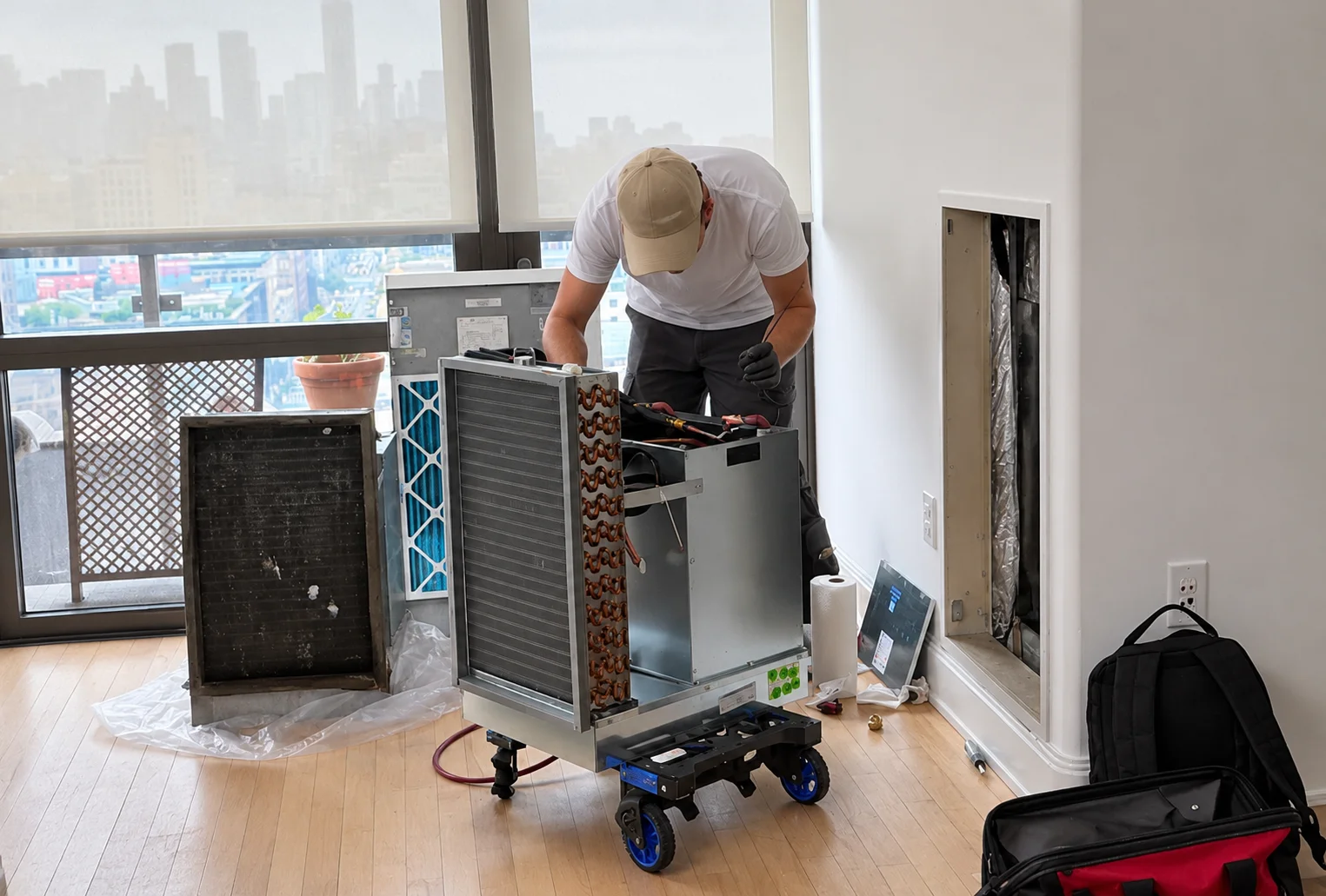
The old equipment is removed, the replacement is installed and connected correctly, and the system is tested after installation to confirm normal cooling and operation.
REPAIR OR REPLACE?
THE CONDITION OF THE SYSTEM COMES FIRST
Replacing an air conditioner is not always the first or best option. A major component failure can sometimes be repaired without replacing the entire system, while repeated breakdowns, limited parts availability, poor overall condition, or multiple aging components may make replacement more practical.
HVAC.Services evaluates the existing equipment before recommending a direction. The technician considers the failed component, system age, repair history, refrigerant type, condition of the major components, and the cost of the work compared with realistic replacement options. This gives the homeowner a clearer basis for deciding whether to invest in the current system or move to new equipment.
WHAT THE NEW SYSTEM HAS TO MATCH
REPLACEMENT PLANNING FOR RESIDENTIAL AC
COOLING LOAD & CAPACITY
Room size, layout, insulation, sun exposure, occupancy, and existing airflow all affect how much cooling capacity the replacement system should provide. The goal is to select equipment that can handle the load without unnecessary oversizing.
ELECTRICAL & SYSTEM COMPATIBILITY
Voltage, circuit capacity, controls, existing connections, drainage, refrigerant lines, and other system conditions need to be checked before the new equipment is selected and installed.
SPACE, AIRFLOW & ACCESS
The replacement has to fit the available installation area while maintaining proper airflow, service clearance, and access to the components that will need inspection or maintenance later.
HOW AIR CONDITIONER REPLACEMENT WORKS
01
SYSTEM
REVIEW
The existing AC system, installation conditions, available space, controls, electrical setup, and cooling requirements are reviewed before replacement options are selected.
02
EQUIPMENT
SELECTION
Replacement options are compared based on capacity, compatibility, physical dimensions, efficiency, and the conditions of the existing installation.
03
REMOVAL & INSTALLATION
The old equipment is safely removed, and the replacement system is positioned, secured, integrated with the existing setup, and prepared for final startup.
04
STARTUP & VERIFICATION
After installation, the system is started and checked for cooling performance, airflow, control response, drainage, and normal operating conditions.
FAQ
Often yes, but the replacement needs to be compatible with the rest of the installation. Capacity, voltage, electrical requirements, controls, refrigerant lines, physical dimensions, airflow, drainage, and other system conditions may affect which models can be used.
HVAC.Services can compare compatible equipment options rather than limiting the homeowner to the exact model or brand that was previously installed.
Not in every situation. Some systems allow individual components to be repaired or replaced, while other configurations require properly matched equipment to maintain correct performance and compatibility. The answer depends on the type, condition, and design of the existing system.
HVAC.Services evaluates the major components together before recommending the scope of replacement. This helps determine whether a partial equipment change is practical or whether a more complete replacement makes better technical sense.
Existing ductwork and controls may sometimes be reused, but their condition and compatibility need to be checked. Duct restrictions, poor airflow, damaged sections, outdated controls, or electrical differences can limit the performance of new equipment even when the air conditioner itself is correctly sized.
HVAC.Services considers the surrounding system as part of the replacement evaluation so the new AC is not installed into conditions that prevent it from operating as intended.
In some homes, replacement creates an opportunity to consider a different equipment type rather than installing an exact version of the old system. Whether an alternative makes sense depends on the building, available space, electrical requirements, existing distribution system, installation cost, and the homeowner’s heating and cooling needs.
HVAC.Services can review practical equipment options during the replacement evaluation and explain how each choice would affect the existing installation before the homeowner commits to a new system.
Professional duct cleaning involves more than cleaning the visible vent covers. The duct runs should be identified and accessed so dust and debris can be loosened and removed from inside the air-distribution system, including areas that are harder to
Replacement becomes worth considering when an air conditioner has repeated breakdowns, major component failures, declining cooling performance, limited parts availability, or repair costs that are difficult to justify compared with new equipment. Age matters, but it should not be the only reason to replace a system.
HVAC.Services evaluates the condition of the existing equipment first. The technician can identify the current problem and help compare the cost and practicality of repair with realistic replacement options before a decision is made.
Experience the HVAC.SERVICES Difference


