

Gas Furnace
DEPENDABLE HEAT THROUGHOUT THE HOME
RESIDENTIAL GAS HEATING SERVICE
A gas furnace heats the home by burning fuel inside the furnace and transferring that heat into the air moving through the system. Burners, ignition components, the heat exchanger, blower, controls, and venting all have to operate correctly for the furnace to deliver steady heat.
When one part begins to fail, the symptoms can range from weak heating and frequent cycling to ignition problems or a furnace that will not start at all. Proper diagnostics help identify the actual cause before parts are replaced or larger repairs are recommended.
GAS FURNACE REPAIR, MAINTENANCE, INSTALLATION & REPLACEMENT
REPAIR
Diagnostics and repair for ignition problems, burner issues, blower failures, control faults, weak heating, short cycling, and other furnace operating problems.
MAINTENANCE
Routine inspection and service for burners, ignition components, filters, blower operation, controls, venting, and other parts that affect safe and reliable furnace operation.
INSTALLATION
Professional installation of residential gas furnaces with proper equipment sizing, airflow, controls, venting, and connection to the existing heating system.
REPLACEMENT
Replacement of aging or failed gas furnaces with new equipment selected for the home, ductwork, heating demand, and existing system configuration.
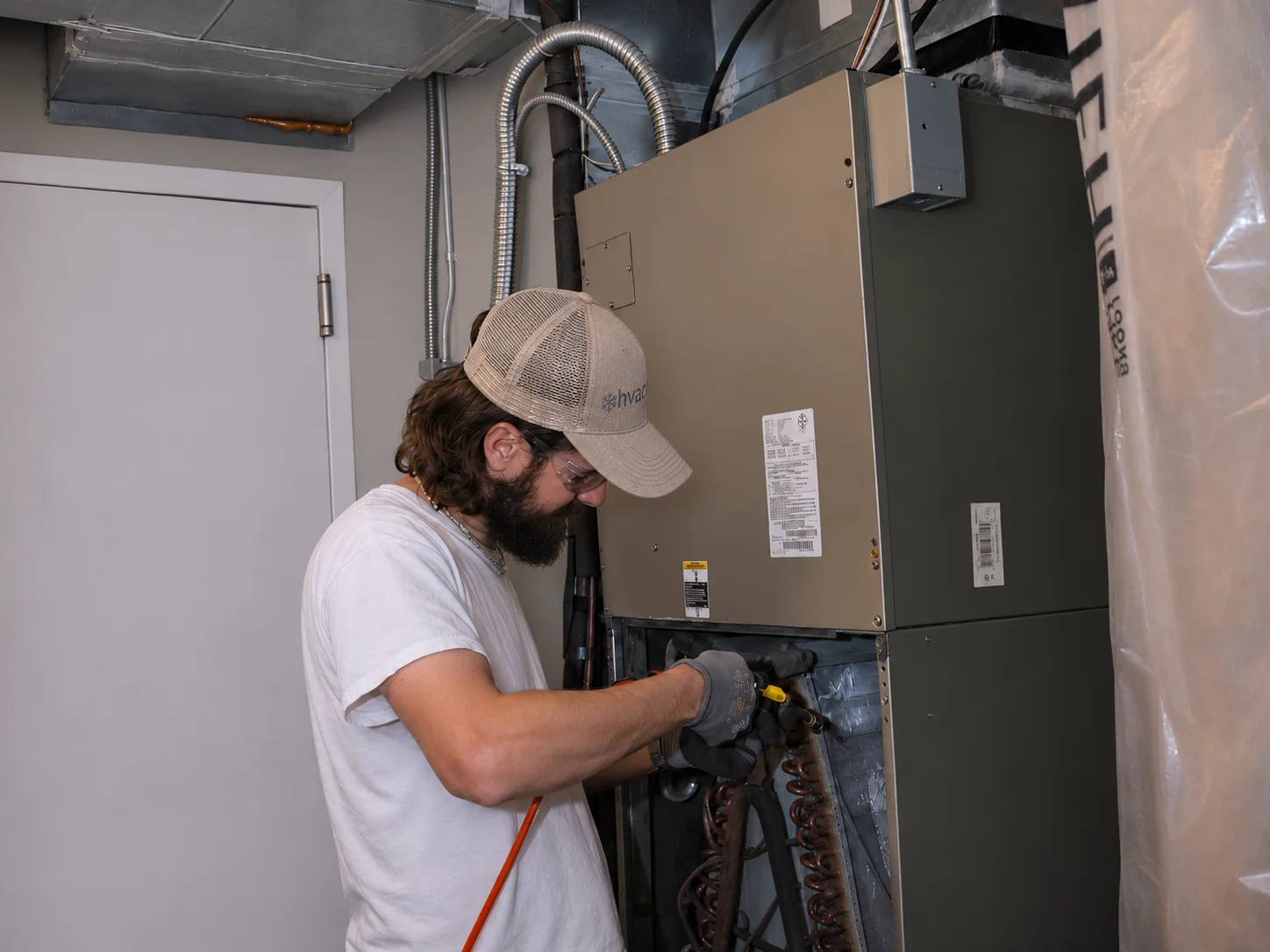
ONE CENTRAL SYSTEM. MULTIPLE SPACES.
A gas furnace depends on several components working in the correct sequence. The ignition system starts combustion, burners produce heat, the heat exchanger transfers it to the air, and the blower moves that heated air through the ductwork.
Problems with burners, ignition components, airflow, controls, or the blower can change how the furnace starts, runs, and delivers heat. Common signs include weak heating, repeated shutdowns, delayed ignition, unusual noises, and frequent cycling.
HVAC.Services technicians inspect the furnace as a complete heating system before recommending repair or replacement. The objective is to identify the actual failure, explain what is happening, and repair the affected component whenever that remains the practical option.
FURNACE
DIAGNOSTICS
RESIDENTIAL GAS HEATING TROUBLESHOOTING
IGNITION AND COMBUSTION
Igniters, flame sensors, burners, gas valves, and combustion conditions all affect how reliably the furnace starts and maintains heat. Testing helps identify delayed ignition, burner faults, flame-loss problems, and other combustion-related issues.
AIRFLOW AND HEAT TRANSFER
Blower performance, filters, duct restrictions, and heat exchanger condition influence how effectively heat moves through the home. Airflow measurements help determine whether poor heating is caused by the furnace itself or by restricted air movement.
CONTROL & SEQUENCING FAULTS
Thermostats, sensors, control boards, relays, and zone controls determine when heating or cooling starts and how the equipment responds to changing demand. Faults in that sequence can create inconsistent operation across multiple areas.
RESIDENTIAL GAS FURNACE COMPONENTS WE SERVICE
BURNERS & IGNITION
Burners, igniters, flame sensors, and related components control how the furnace starts combustion and maintains a stable flame during operation.
HEAT EXCHANGERS
The heat exchanger transfers combustion heat to the air moving through the furnace. Cracks, corrosion, or overheating can affect both performance and safe operation.
BLOWERS & MOTORS
Blower motors, wheels, capacitors, and related components move heated air through the ductwork and help maintain proper airflow across the furnace.
GAS VALVES & CONTROLS
Gas valves, control boards, relays, and wiring regulate fuel delivery, ignition sequence, operating cycles, safety response, and overall furnace performance.
SAFETY SWITCHES & SENSORS
Limit switches, pressure switches, flame sensors, and other safety devices monitor operating conditions and shut the furnace down when abnormal conditions are detected.
VENTING & AIRFLOW
Filters, return-air paths, supply ductwork, venting, and exhaust components all influence furnace airflow, combustion, and heat delivery throughout the home.
FAQ
A furnace can stop producing heat because of an ignition failure, dirty flame sensor, gas valve problem, thermostat issue, control fault, or loss of airflow. In some cases, the blower may still run even though the burners are not operating correctly.
HVAC.Services technicians check the ignition sequence, burner operation, controls, airflow, and safety circuits to identify the actual cause before recommending repair.
Common signs include repeated attempts to start, delayed burner ignition, clicking without heat, short heating cycles, or burners that light and then shut off. Igniters, flame sensors, gas valves, pressure switches, and control components can all affect the ignition sequence.
Our technicians test the complete startup sequence to identify which component is preventing normal furnace operation.
A furnace that ignites and then shuts down shortly afterward often has trouble confirming or maintaining a stable flame. A dirty flame sensor, ignition problem, gas delivery issue, pressure-switch fault, or control-board problem can interrupt the heating cycle.
HVAC.Services technicians inspect the ignition and safety sequence rather than replacing parts based only on the visible symptom.
A noticeable gas odor should be treated as a potential safety issue. Do not attempt to troubleshoot the furnace or operate electrical switches near the equipment. Leave the area and contact the gas utility or emergency services from a safe location.
After the property has been declared safe, an HVAC professional can inspect the furnace, gas valve, connections, ignition components, and related equipment before the system is returned to service.
Rattling, squealing, humming, banging, or scraping sounds can come from blower components, motors, bearings, loose panels, ignition problems, or changes in ductwork as the system heats and cools. The type and timing of the noise often help narrow down the source.
HVAC.Services technicians inspect the furnace while it is operating so mechanical, airflow, and combustion-related noises can be evaluated under normal working conditions.
Experience the HVAC.SERVICES Difference


