

Rooftop Unit
PACKAGED HVAC FOR COMMERCIAL BUILDINGS
ROOFTOP HVAC BUILT FOR COMMERCIAL DEMANDS
Commercial rooftop units bring heating, cooling, airflow, and controls together in one packaged system positioned above the building. That compact layout is built for spaces where equipment has to handle long operating hours, changing occupancy, and steady commercial loads without taking up valuable interior space.
Performance depends on more than capacity alone. Airflow, refrigeration, heating components, controls, drainage, and electrical operation all have to stay balanced for the unit to deliver consistent comfort throughout the building.
COMMERCIAL ROOFTOP UNIT SERVICES
REPAIR
Diagnostics and repair for cooling, heating, airflow, electrical, control, and refrigeration issues affecting commercial rooftop equipment and overall unit performance.
MAINTENANCE
Routine service helps keep coils, filters, blowers, belts, controls, drainage, and electrical components operating consistently under demanding commercial conditions.
INSTALLATION
Rooftop unit installation for new commercial spaces, renovations and equipment upgrades requiring properly sized packaged heating and cooling equipment.
REPLACEMENT
Replacement of aging or failing rooftop units with properly sized packaged equipment selected for the building, operating schedule, and commercial load requirements.
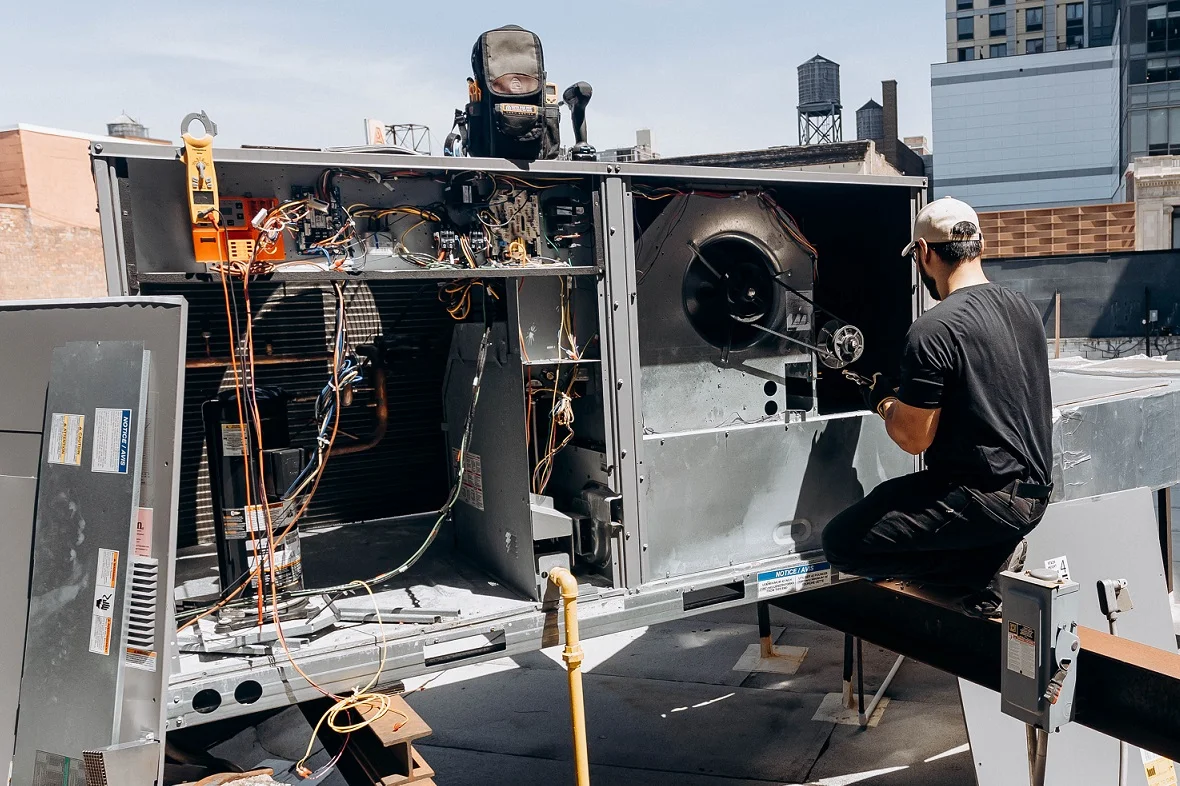
PACKAGED ROOFTOP PERFORMANCE
A rooftop unit keeps the primary mechanical equipment in one exterior cabinet, simplifying the way a commercial building uses valuable interior space. The entire assembly remains concentrated in one serviceable location above the occupied areas.
That layout gives technicians direct access to the major sections of the unit for inspection, troubleshooting, maintenance, and component replacement without working through multiple equipment locations inside the property.
For businesses, the result is a practical HVAC configuration designed around accessibility, compact placement, and the operational demands of commercial buildings.
ROOFTOP UNIT COMPONENTS WE SERVICE
COMPRESSOR
SERVICE
Compressor diagnostics, electrical checks, operating performance, refrigerant-related issues, and component replacement when required.
EVAPORATOR & CONDENSER COILS
Coil inspection, cleaning, heat-transfer performance checks, and service for both evaporator and condenser sections.
BLOWERS
& FAN ASSEMBLIES
Blower motors, fan assemblies, belts, bearings, and related components responsible for moving air through the unit.
CONTROLS
& SENSORS
Thermostats, sensors, control boards, relays, wiring, and communication components that regulate rooftop unit operation.
HEATING
COMPONENTS
Heating sections, ignition components, safety controls, electrical elements, and related parts used during heating operation.
DRAINAGE
& AIRFLOW
Drain pans, condensate lines, filters, dampers, and airflow components that support stable operation and proper moisture removal.
FROM SYMPTOM
TO CAUSE
COMMERCIAL RTU DIAGNOSTICS
LOSS OF CAPACITY
Reduced output can develop from coil condition, refrigerant problems, compressor performance, fan operation, or changing building loads. Testing the unit under operating conditions helps identify where capacity is being lost.
AIR DELIVERY PROBLEMS
Belts, blower assemblies, filters, dampers, motors, and duct connections all affect how conditioned air reaches the building. Changes in air delivery can quickly show up as uneven temperatures or longer run times.
CONTROL & ELECTRICAL FAULTS
Sensors, relays, contactors, wiring, boards, and safety controls coordinate rooftop unit operation. Electrical testing helps distinguish a control fault from a mechanical or refrigeration problem before repair begins.
FAQ
Frequent starting and stopping, often called short cycling, can be caused by thermostat or sensor problems, restricted airflow, electrical faults, control issues, refrigerant conditions, or equipment that is struggling to complete a normal operating cycle. In some cases, the RTU may still provide heating or cooling, but repeated cycling can reduce efficiency and place additional stress on compressors, motors, and electrical components. The exact cause usually requires testing while the unit is operating.
The experienced technicians at HVAC.Services work with commercial rooftop equipment regularly and know how to trace short-cycling problems back to their source. Detailed diagnostics help determine what actually requires service instead of replacing components unnecessarily.
Water leaks from a commercial rooftop unit are commonly connected to clogged condensate drains, damaged or overflowing drain pans, poor drainage, coil icing, or airflow restrictions. Moisture may remain around the cabinet, collect on the roof, or eventually affect areas inside the building. Because several conditions can produce the same visible leak, the drainage system, coils, airflow, and operating conditions should all be checked.
Our experienced commercial HVAC team has handled a wide range of RTU drainage and moisture problems over the years. We can identify where the water is coming from and address the condition causing it, not just the visible result.
There is no single maintenance interval that fits every commercial rooftop unit. Service frequency depends on operating hours, building use, equipment age, seasonal demand, filter loading, rooftop conditions, and the overall condition of the RTU. Equipment that runs for long hours or serves busy commercial spaces may need more frequent inspection than units with lighter operating schedules. Regular maintenance is also an opportunity to catch belt wear, coil buildup, electrical deterioration, drainage problems, and control issues before they affect operation.
HVAC.Services has extensive experience maintaining commercial rooftop equipment in demanding operating environments. Our technicians can evaluate the actual condition and workload of the unit and recommend a service schedule based on how the equipment is being used.
An RTU can continue running while producing little or insufficient cooling for several reasons. Dirty coils, restricted airflow, refrigerant problems, compressor issues, fan performance, sensors, controls, or electrical faults can all reduce cooling capacity. The unit may also cool normally under a light load but struggle during hotter periods or when occupancy increases. Proper diagnosis should include temperature readings, airflow checks, electrical testing, and evaluation of the refrigeration side of the equipment.
With years of hands-on commercial HVAC experience, our technicians are familiar with the combinations of faults that can reduce RTU cooling capacity. We test the equipment under operating conditions and identify where performance is being lost before recommending the appropriate repair.
The decision to repair or replace an older RTU depends on several factors, including equipment age, repair history, current condition, availability of replacement parts, operating efficiency, and the cost of the required repair. A well-maintained unit with one isolated failure may still be worth repairing, while repeated compressor, electrical, control, or major mechanical problems can make continued repairs less practical. Building requirements and future operating costs should also be considered before making the decision.
Our team has worked with commercial rooftop equipment across many different conditions and stages of service life. HVAC.Services can assess the RTU as a whole, explain the practical repair and replacement options, and help determine which approach makes more sense for the property.
Experience the HVAC.SERVICES Difference


