

Split System
BUILT FOR COMMERCIAL PERFORMANCE
BUILT FOR DEMANDING COMMERCIAL SPACES
A commercial split system works across two sides of the building — indoor air handling and outdoor condensing equipment — and performance depends on both. Capacity, airflow, refrigeration, controls, and operating conditions all have to come together under real commercial loads.
That balance becomes especially important in spaces with long operating hours, changing occupancy, and different temperature demands throughout the day. When the equipment is properly matched and operating as intended, the result is stable comfort, efficient heat transfer, and dependable performance across the building.
COMMERCIAL SPLIT SYSTEM SERVICES
REPAIR
Diagnostics and repair for cooling, heating, airflow, electrical, refrigerant, and control issues affecting commercial split equipment and overall system performance.
MAINTENANCE
Regular service helps keep indoor and outdoor components operating consistently under changing commercial loads and long daily runtimes.
INSTALLATION
Commercial split system installation for new spaces, renovations, equipment upgrades, and applications that require separate indoor and outdoor components.
REPLACEMENT
Replacement of aging or failing split equipment with properly matched indoor and outdoor components selected for the demands of the building.
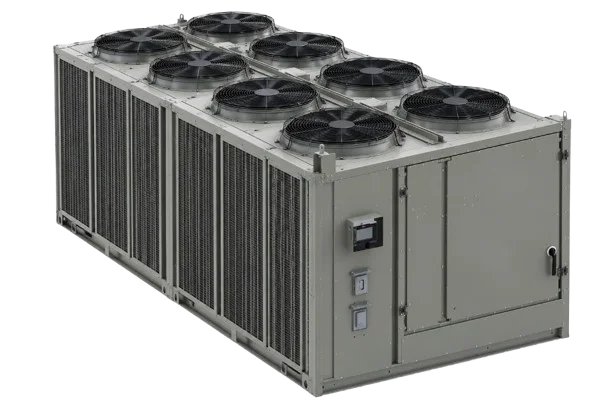
ONE SYSTEM. TWO SIDES OF THE BUILDING.
Commercial split systems separate the indoor air-handling equipment from the outdoor condensing section. This configuration allows major components to be positioned where they best fit the building while still operating as one connected HVAC system.
The outdoor condensing unit handles heat rejection and supports the refrigeration cycle, while the indoor equipment manages airflow and heat exchange inside the space. Refrigerant lines, controls, electrical connections, and drainage tie both sides together.
For commercial properties, this layout offers flexibility in equipment placement, capacity, service access, and future replacement of individual components.
NEW APARTMENT. OLD DUCTWORK.
COMMERCIAL SPLIT SYSTEM TROUBLESHOOTING
COOLING LOSS
Reduced cooling can be linked to airflow restrictions, dirty coils, refrigerant issues, compressor problems, or faults in the air handler. The same symptom can develop from very different parts of a commercial split setup.
AIRFLOW ISSUES
Filters, blower motors, belts, coils, controls, and ductwork all influence how air moves through the building. When airflow drops, comfort and overall HVAC performance can decline across multiple areas at once.
CONTROL FAULTS
Thermostats, sensors, wiring, boards, and communication components can all affect operation. Accurate testing helps separate a control problem from a mechanical or refrigeration issue before repair begins.
COMMERCIAL SPLIT SYSTEM COMPONENTS WE SERVICE
AIR
HANDLERS
Indoor air-handling equipment, blower assemblies, coils, filters, motors, and related airflow components.
CONDENSING
UNITS
Outdoor condensing equipment, compressors, condenser coils, fan motors, electrical components, and controls.
EVAPORATOR & CONDENSER COILS
Coil inspection, cleaning, performance testing, and service for heat-transfer components on both sides of the system.
REFRIGERANT
CIRCUIT
Refrigerant lines, operating pressures, temperature performance, leak-related issues, and connected components.
CONTROLS
& THERMOSTATS
Thermostats, sensors, control boards, wiring, relays, and communication components that manage system operation.
BLOWERS & AIRFLOW
COMPONENTS
Blower motors, belts, filters, dampers, and other components responsible for moving conditioned air through the space.
FAQ
Service frequency depends on equipment type, operating hours, occupancy, outdoor exposure, and the demands of the commercial space. Systems that run for long periods or serve high-occupancy properties may require more frequent attention than lightly used equipment.
Professional maintenance typically focuses on operating performance and the condition of key components such as filters, coils, blowers, electrical parts, controls, drainage, and outdoor condensing equipment. Maintaining proper airflow around the condenser is especially important for capacity and efficiency.
HVAC.Services can inspect commercial split equipment and recommend a maintenance schedule based on the condition of the system and the way the building uses it.
Yes. The indoor air handler and outdoor condensing equipment are separate assemblies, so each side can be inspected and serviced according to the components involved. The indoor section may require attention to airflow, coils, blowers, filters, controls, or drainage, while the outdoor section includes compressors, condenser coils, fans, electrical components, and refrigeration controls.
Even when the problem appears to be limited to one unit, the performance of both sides should be considered because they operate as one connected refrigeration and air-distribution system.
Our HVAC.Services technicians can service individual components while also checking how the indoor and outdoor equipment perform together.
Reduced cooling can come from several parts of the system, including restricted airflow, dirty evaporator or condenser coils, refrigerant issues, compressor problems, fan motor faults, control problems, or incorrect operating conditions.
Because the indoor air handler and outdoor condensing unit work together, the source of the problem may be located on either side. Proper diagnosis may include airflow checks, temperature measurements, electrical testing, control inspection, and refrigeration performance testing.
HVAC.Services can evaluate the complete commercial split setup and identify the actual cause of declining cooling performance before recommending repair.
A commercial split system separates the main HVAC components into indoor and outdoor equipment. The indoor section is typically an air handler, furnace, or indoor coil, while the outdoor section may be a condensing unit or heat pump connected by refrigerant lines.
A rooftop packaged unit places the heating and cooling components together in one cabinet. Split configurations provide more flexibility in equipment location and can be useful where indoor and outdoor components need to be installed separately.
HVAC.Services technicians work with commercial split equipment throughout Manhattan and can inspect, diagnose, repair, maintain, or replace components on both sides of the system.
The decision depends on the condition of the major components, repair history, equipment age, operating performance, parts availability, and how well the existing indoor and outdoor units remain matched to the needs of the building.
A repair may make sense when the main equipment remains serviceable and the problem is limited to a specific component. Replacement becomes more practical when failures are recurring, major components are deteriorating, capacity no longer matches the application, or compatible equipment and parts are becoming difficult to source.
HVAC.Services can inspect the equipment, identify the current fault, and evaluate the overall condition of the commercial split setup before discussing repair or replacement options.
Experience the HVAC.SERVICES Difference


